
 Article
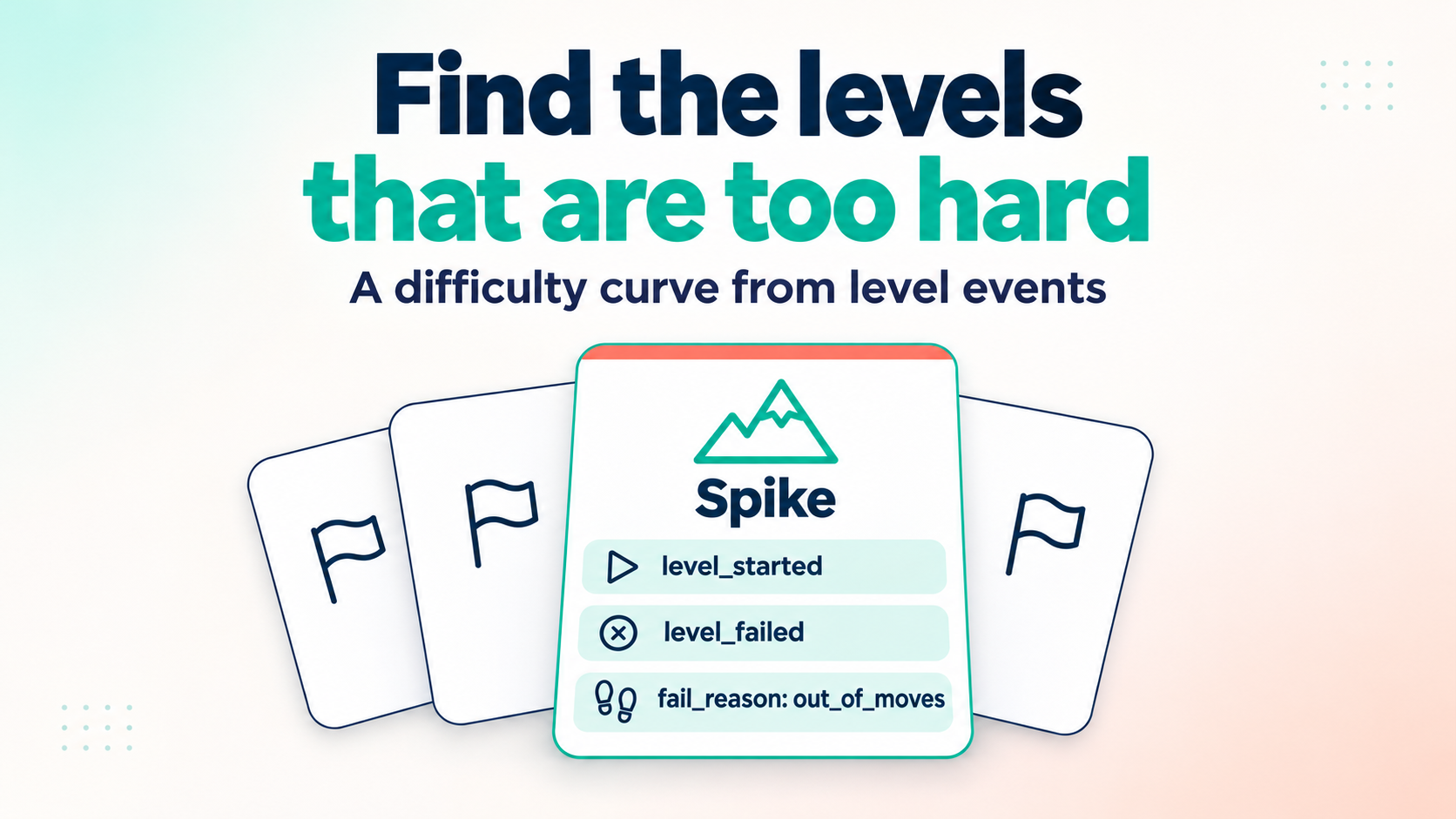
Game Balancing with Data: Find the Levels That Are Too Hard
Find the levels that are too hard or too easy: build a difficulty curve from level events, read fail reasons, and check a balancing change with data.
Read article →Guides, architecture notes, and practical lessons from building portable analytics infrastructure.
Article
Find the levels that are too hard or too easy: build a difficulty curve from level events, read fail reasons, and check a balancing change with data.
Read article → Article
What the DAU/MAU stickiness ratio says about your game, how to count active players correctly, and when launches, updates or ads make it mislead.
Read article →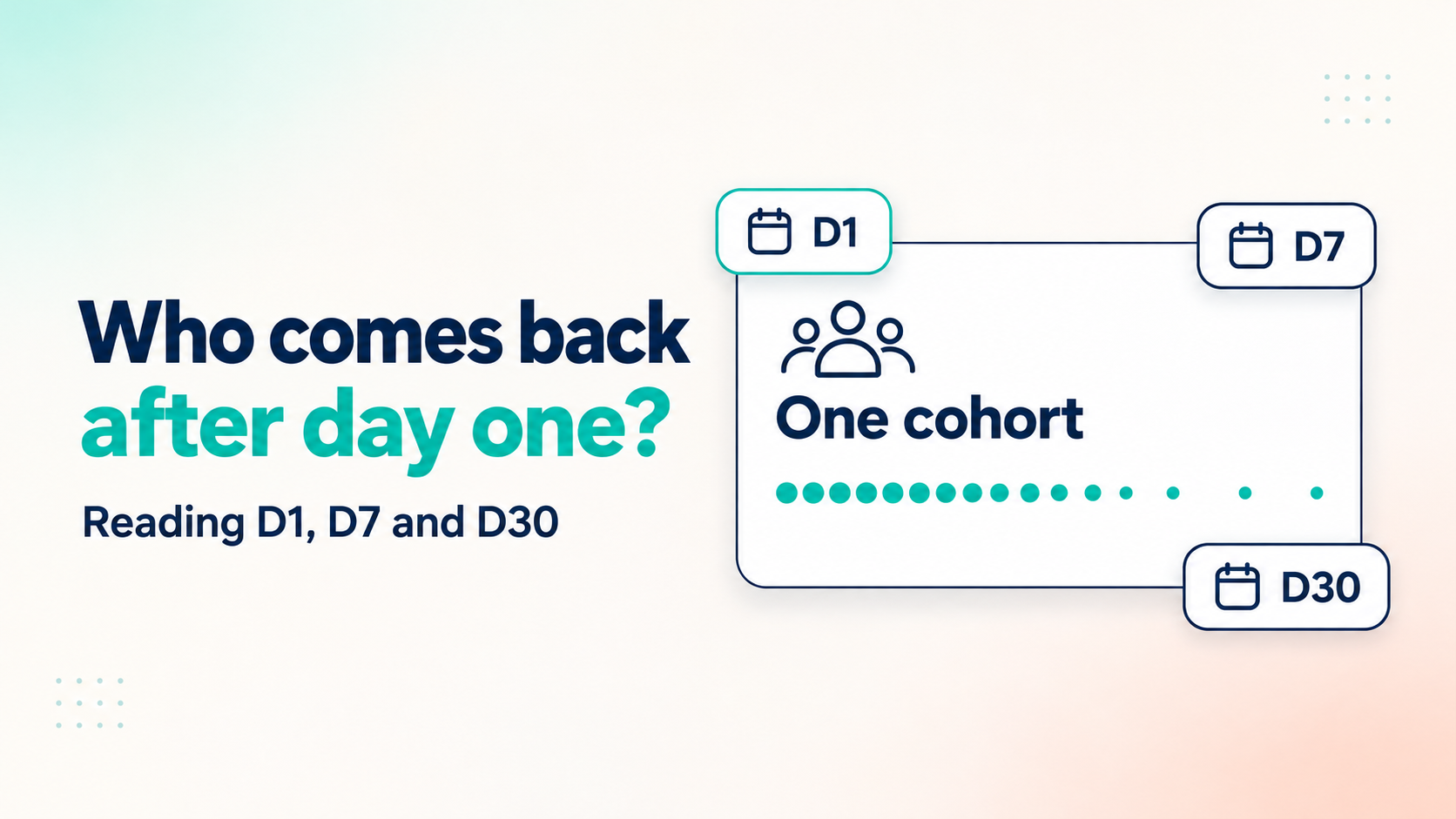 Article
What D1, D7 and D30 retention mean, how to read a cohort retention curve, and which design question an early drop points to. With a synthetic demo.
Read article →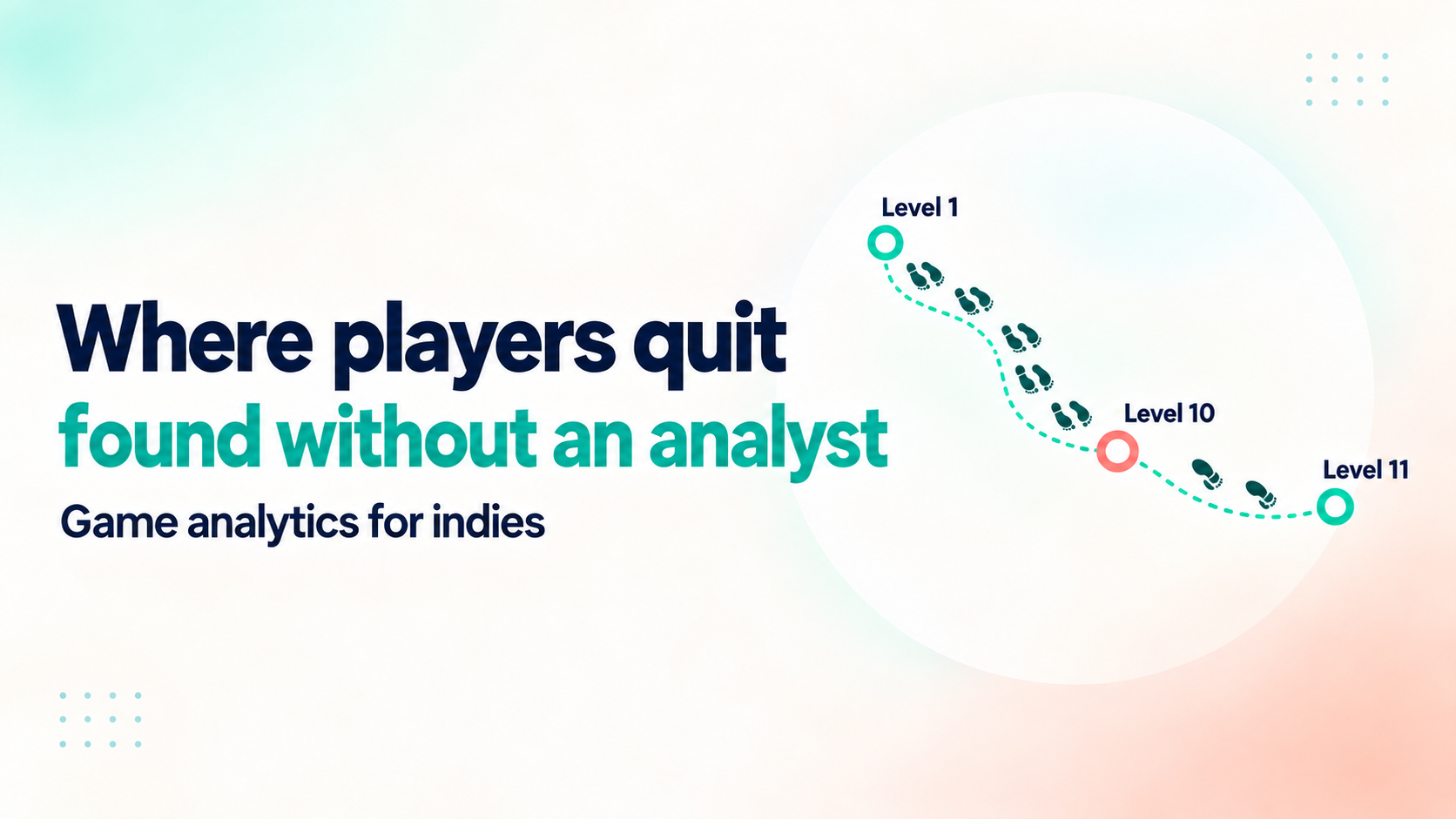 Article
No analyst? Find where players quit your game: pick a few events, let Codex with the Rawbbit plugin propose and add them, then ask the data. Copyable prompts.
Read article →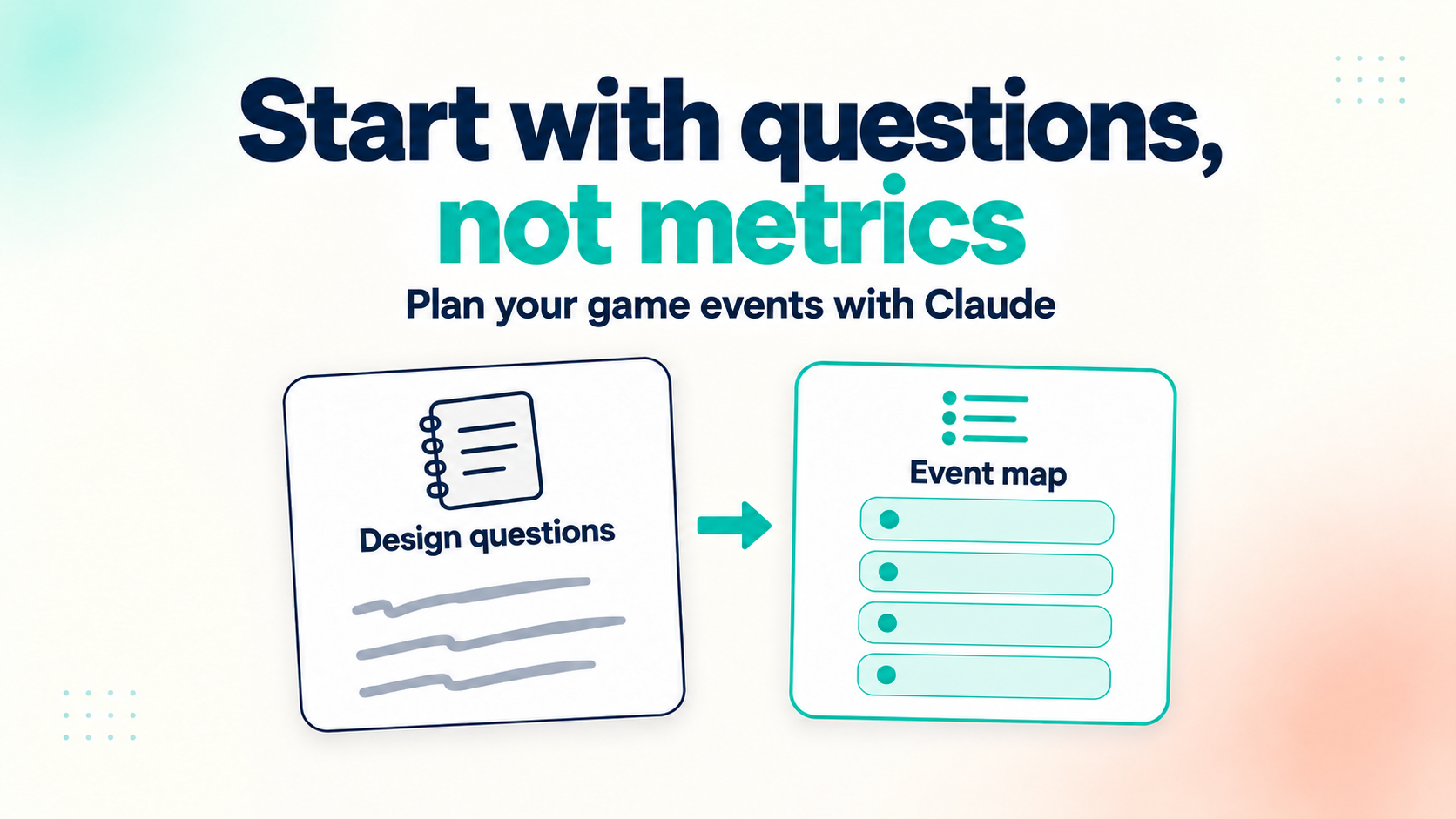 Article
Turn your design questions into an event map with Claude: which events your game should record, what details each needs, and how to hand it to your developer.
Read article → Article
Install the Rawbbit Game Events plugin in Claude, review the event map it proposes, and send your game's events over HTTPS to storage you own and can query.
Read article →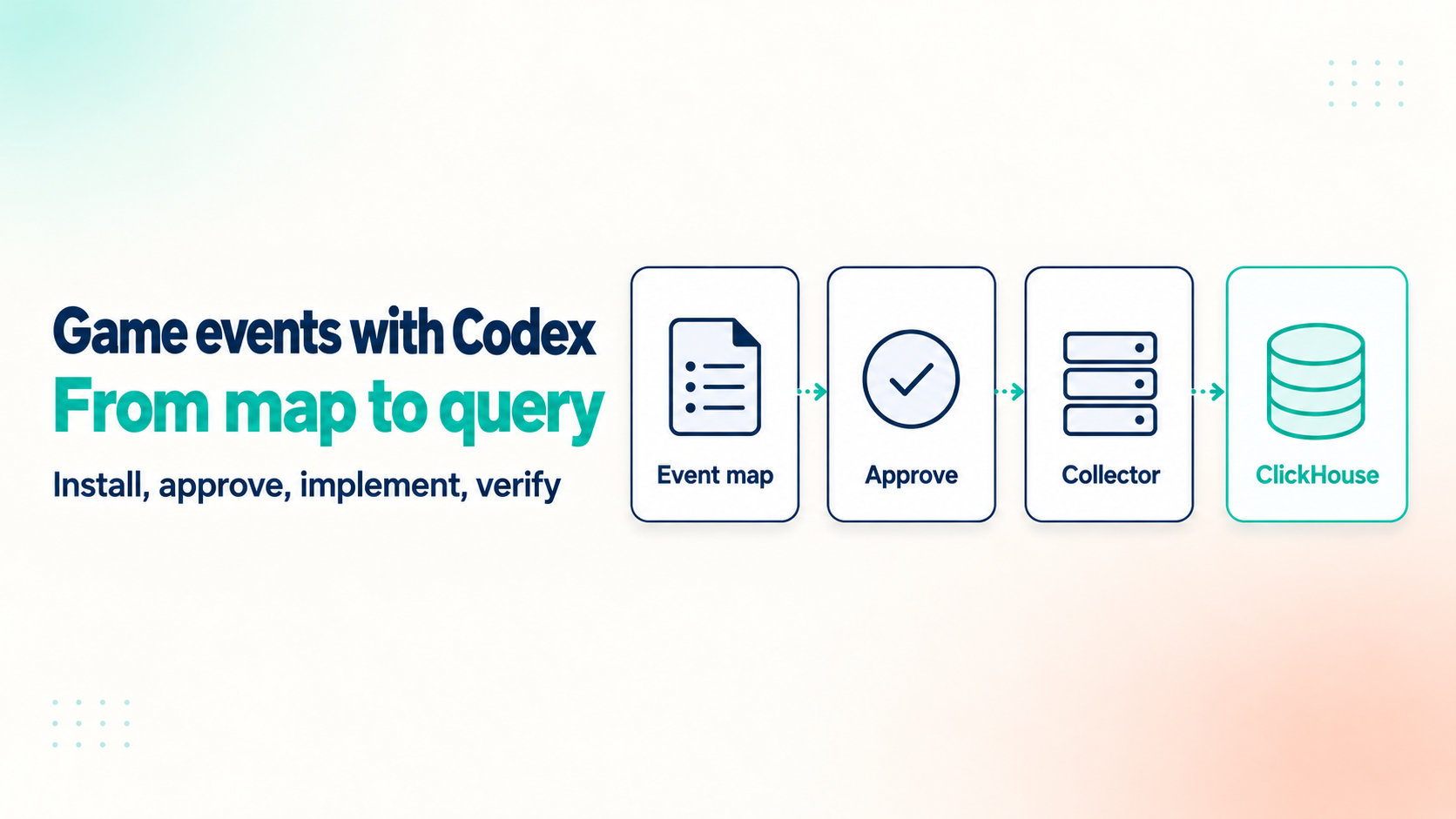 Article
Install the Rawbbit Game Events plugin in Codex, review the event map it proposes, add the approved events, and follow them into ClickHouse and Metabase.
Read article →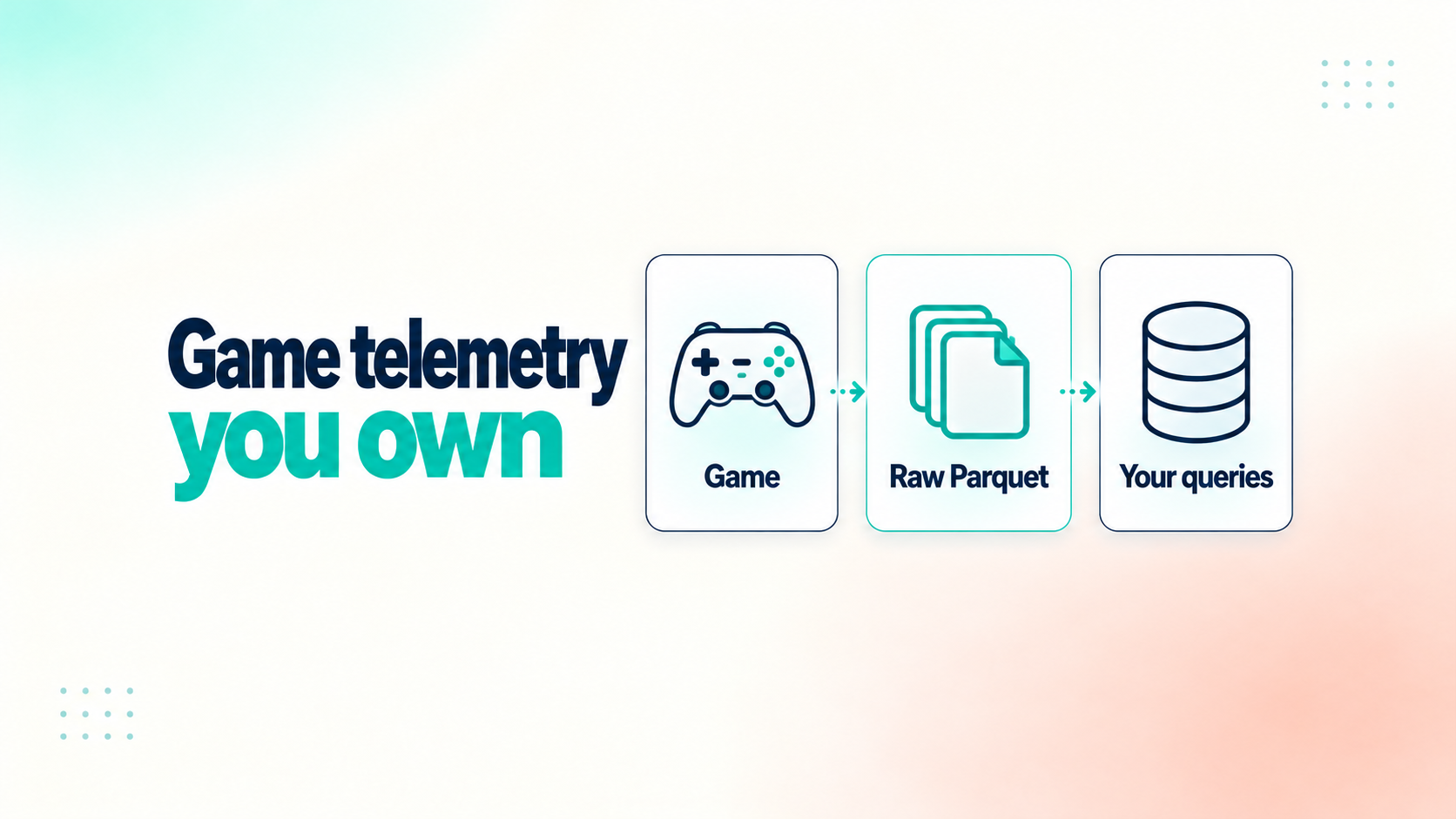 Article
Which game telemetry events to send first, how to name them, and how to get them into raw data you own and can query, with a worked match-3 example.
Read article →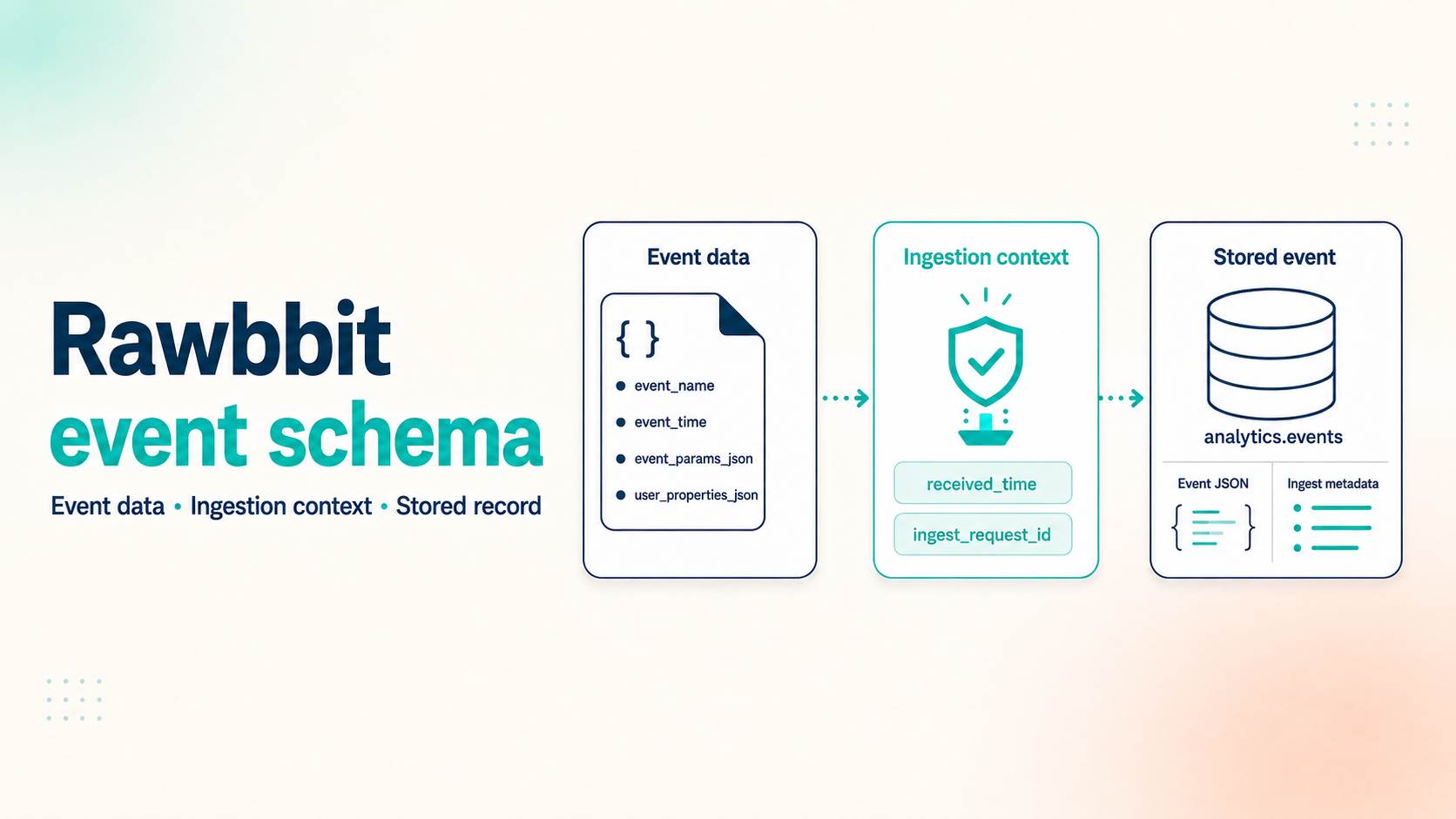 Article
Understand the Rawbbit event payload, which fields your game sends, what ingestion adds, and how the 26-column record appears in analytics.events.
Read article →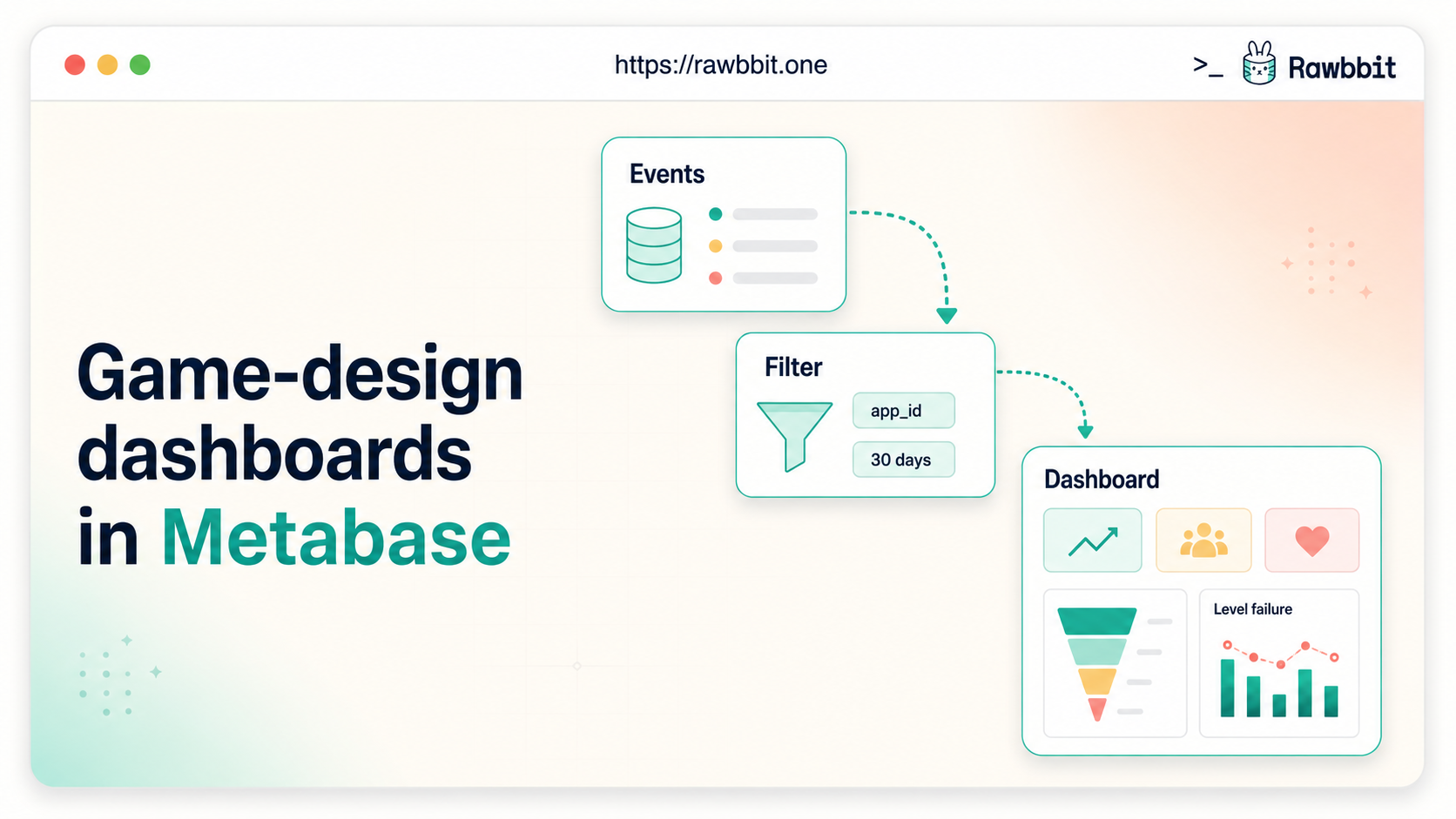 Article
Build a practical Metabase dashboard from Rawbbit events, with ClickHouse SQL for game health, funnels, difficult levels, and experiments.
Read article →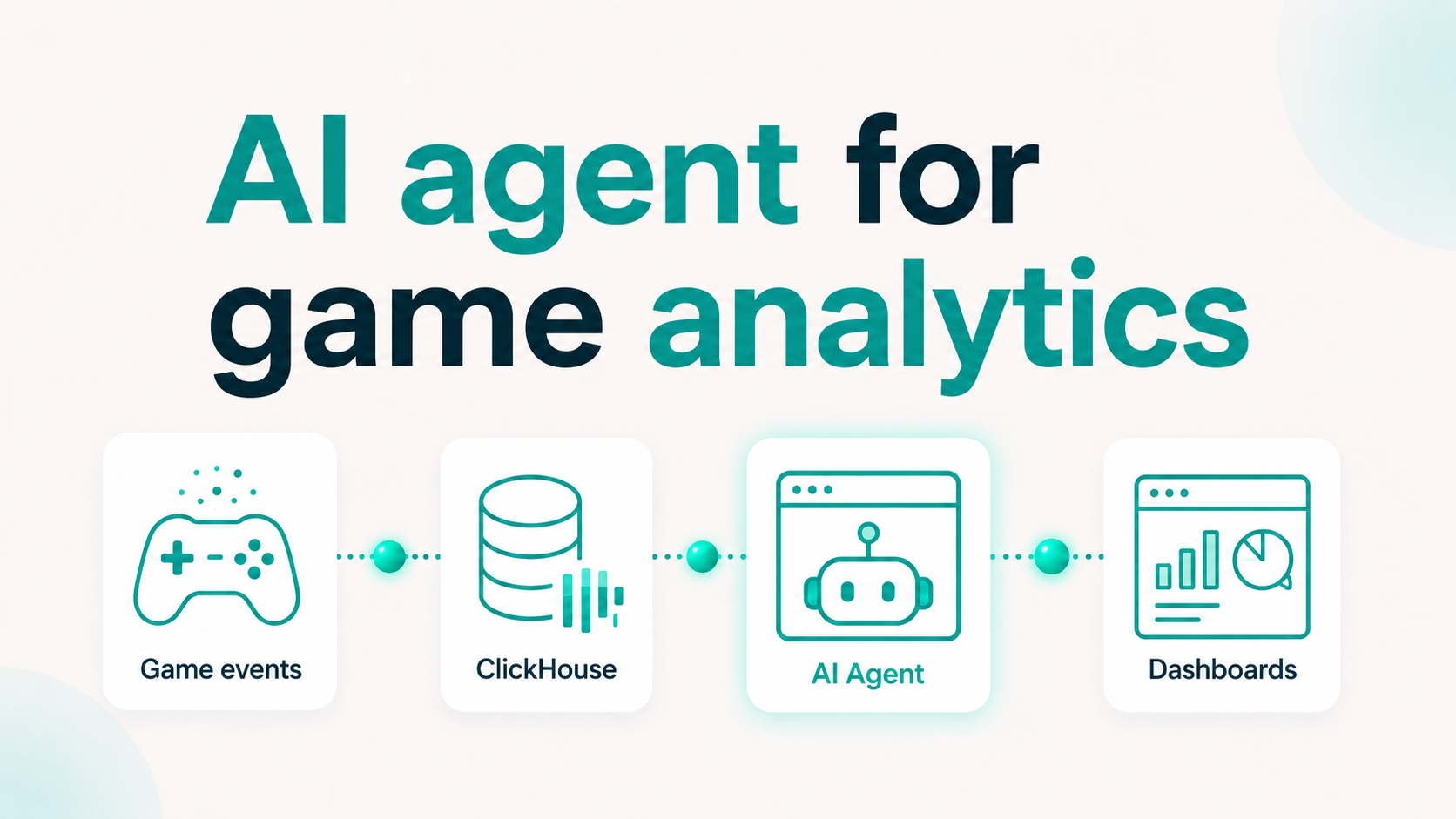 Article
Connect the AI agent your team already uses to your own player data and ask questions in plain language. Six real examples with the SQL the agent wrote and the answers it returned.
Read article →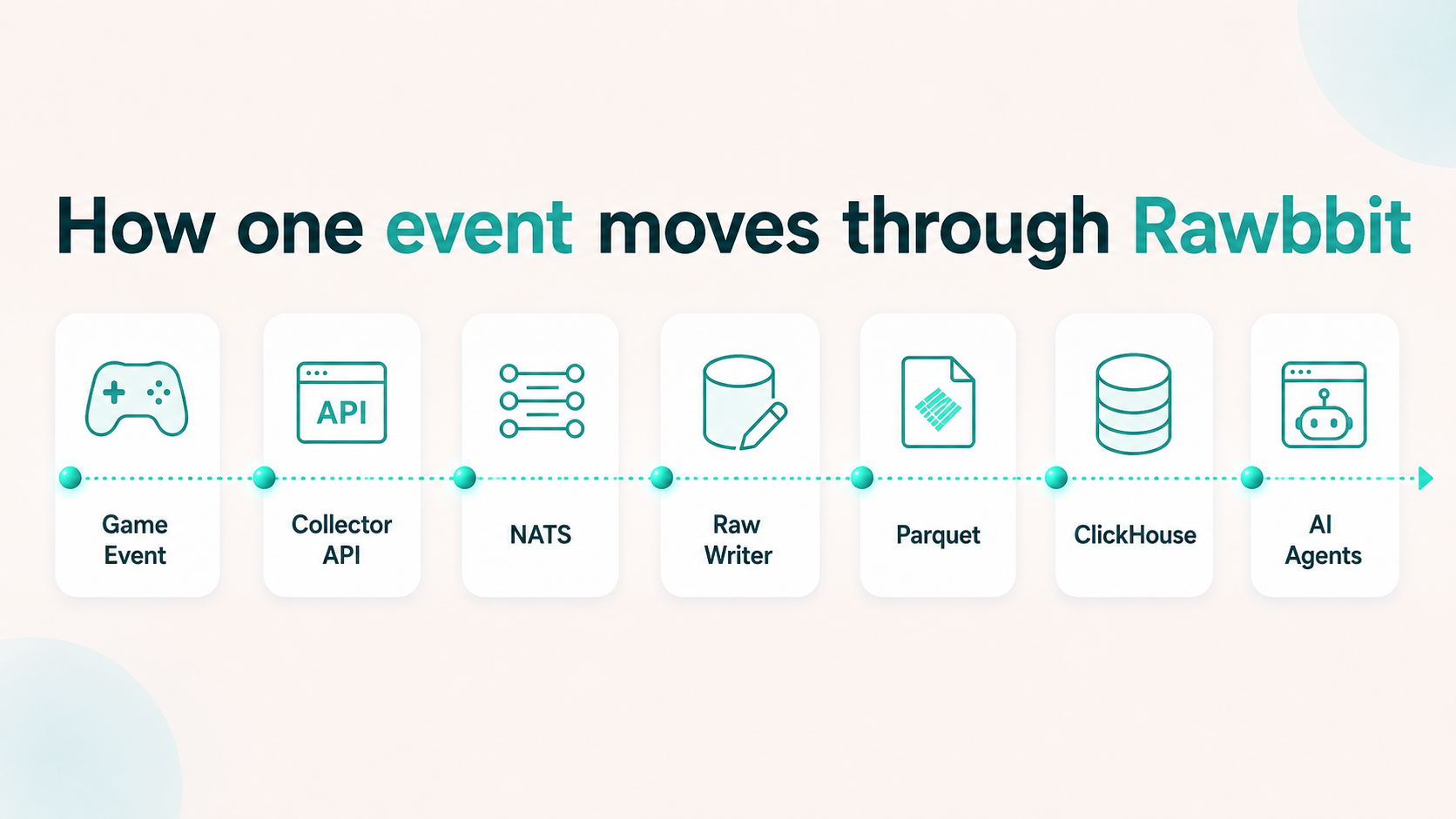 Article
A player fails a level and your game sends an event. Follow it through the collector, the buffer, raw Parquet, ClickHouse and out to the people asking questions, with the commands to try each step.
Read article →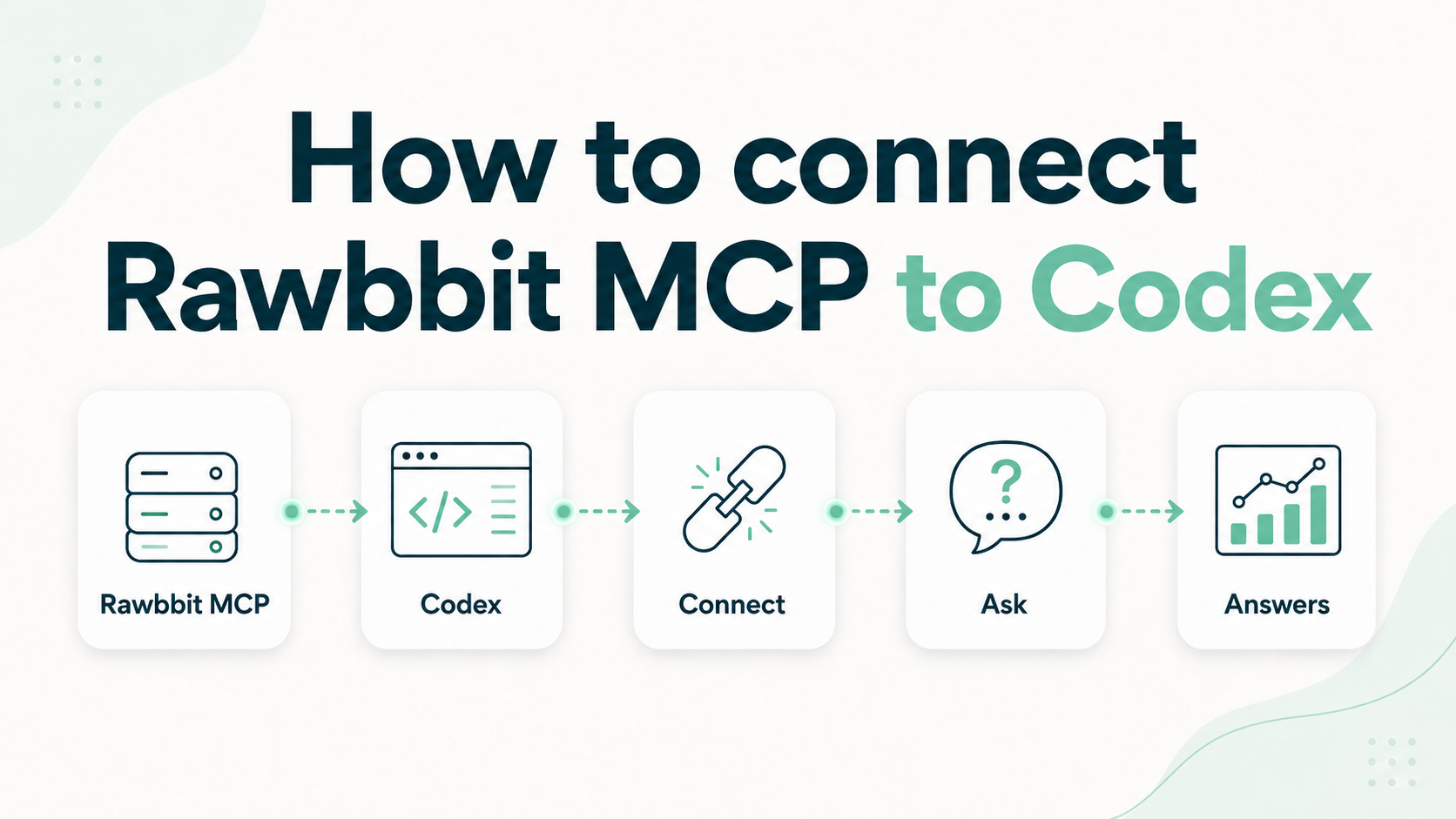 Article
Connect Codex to a Rawbbit MCP server over HTTPS, verify the read-only analytics tools, and query game events safely.
Read article →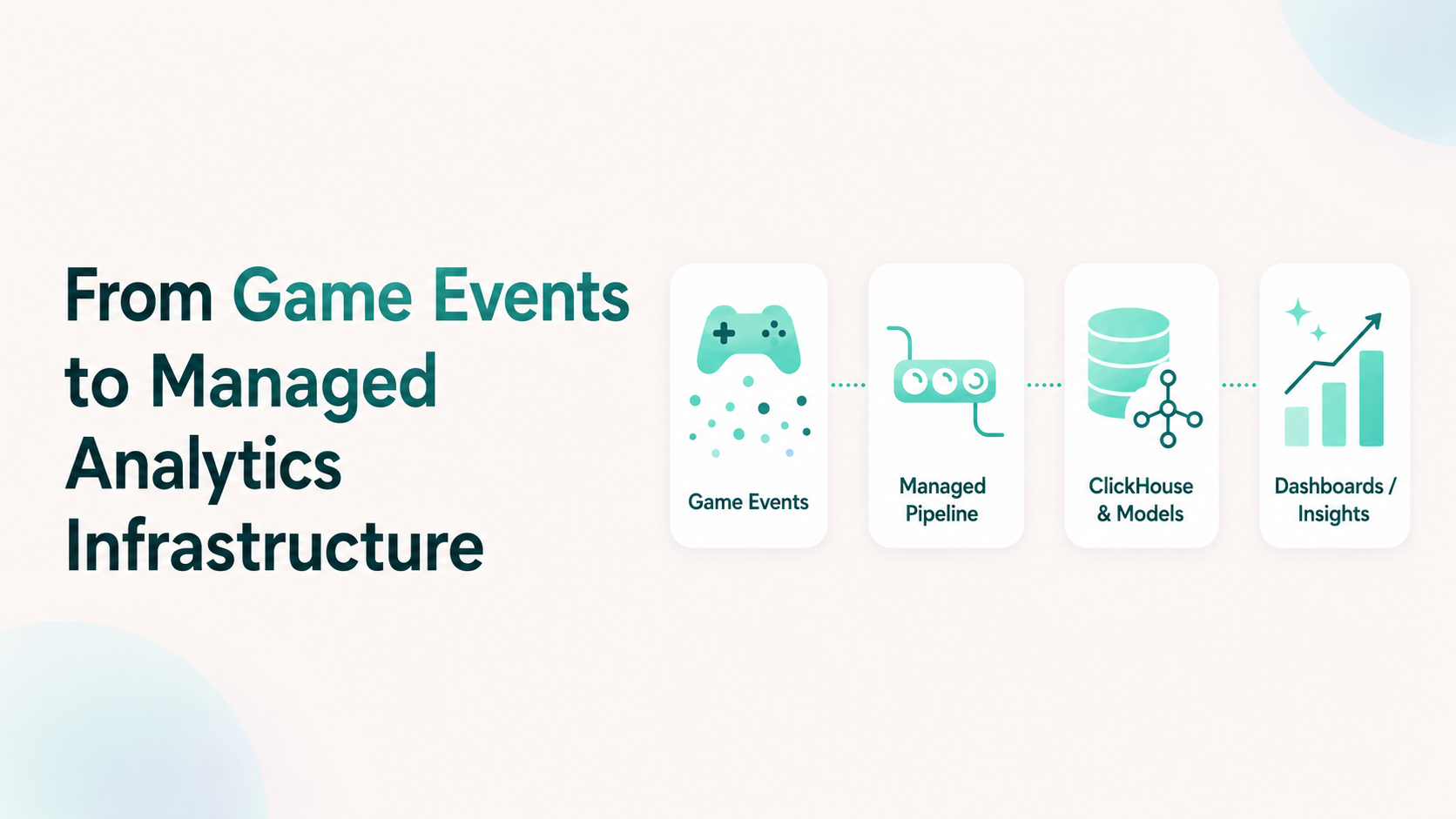 Article
Rawbbit hosts, deploys, and maintains the game data pipeline, ClickHouse database, data models, and dashboards your studio needs to understand player behavior without hiring data engineers.
Read article →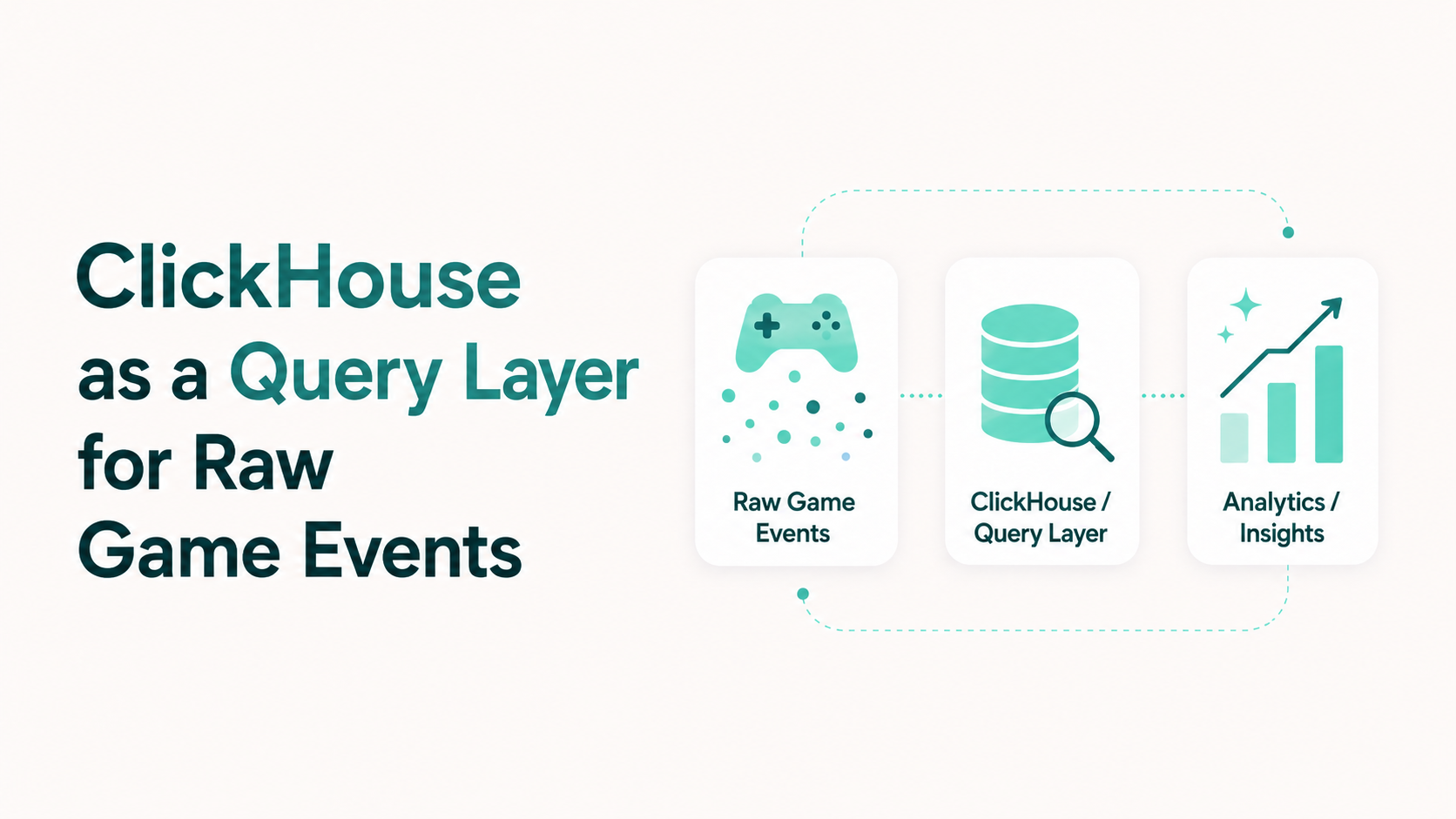 Article
Why ClickHouse is now a supported query layer over Rawbbit's raw Parquet event data — and when it fits game analytics workloads.
Read article →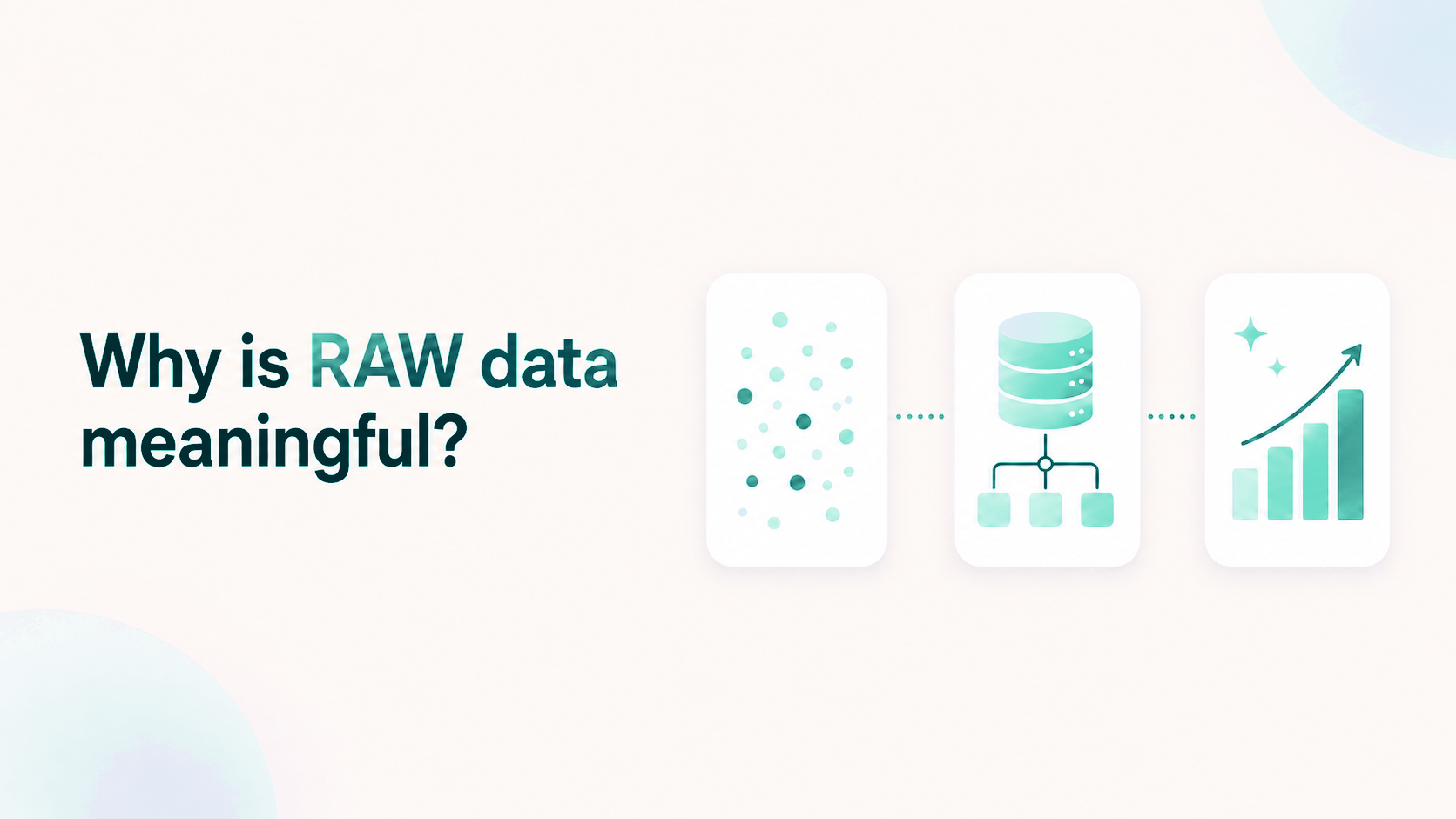 Article
Aggregates are opinions you can recompute. The raw layer is where the facts live — and why a game studio should treat it as the contract its analytics stack reads from.
Read article → Comparison
Amplitude is a hosted product analytics platform. Rawbbit is a self-hosted raw event pipeline. They solve different problems — here's how to tell which one fits.
See comparison →